Remember – Dust is Mould Food!
Viruses are hosted in bacteria; bacteria and mould host on particulate matter, such as dust particles and pollen particles, either in the air or on surfaces.
Dust is not just an inert nuisance; it’s essentially a buffet for mould. Household dust is made up of tiny organic particles such as dead skin cells, textile fibres, pet dander, pollen, insect debris, and microscopic food residues. These materials are rich in carbon and nutrients, which mould spores need to germinate and grow. When dust settles on surfaces, especially in hidden or undisturbed areas, it creates a nutrient layer that mould can feed on.
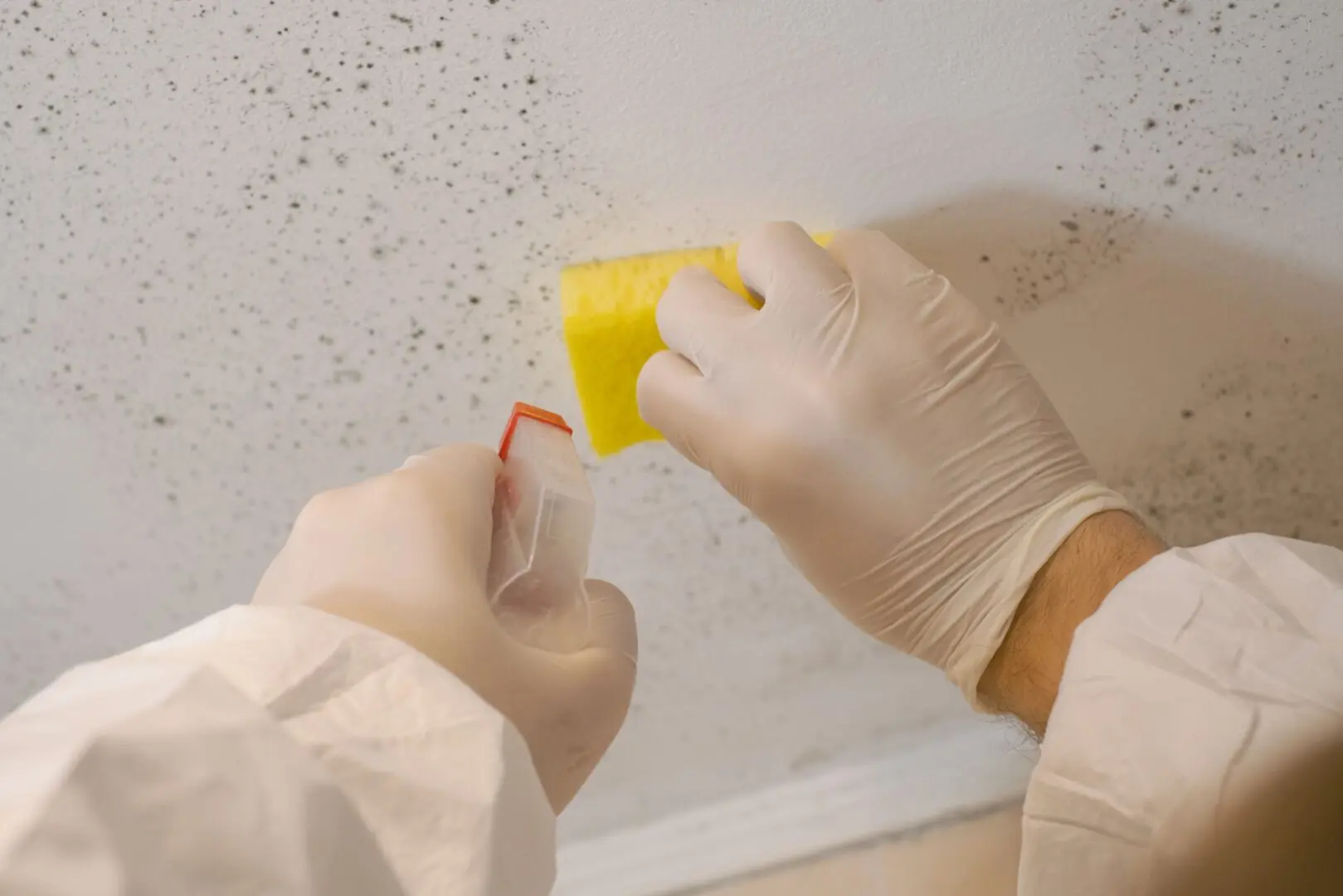
On its own, dust won’t always cause mould — moisture is the trigger. But when humidity rises, condensation forms, or a surface becomes damp, mould spores already present in the air land on dusty surfaces and begin feeding almost immediately. This is why mould often reappears on areas that look “clean” but haven’t been properly detailed at a microscopic level. Bathrooms, wardrobes, air-conditioning systems, ceiling cavities, and behind furniture are prime examples.
This is also why simply killing mould without removing dust is a temporary fix. Dead spores, fragmented mould, and dust remain behind, continuing to provide food for future growth. True mould prevention requires both moisture control and thorough fine-particle cleaning. Remove the food source, control the moisture, and mould has nothing left to live on.