Split Cycle & Ducted Air Conditioners: Keep Them Clean!
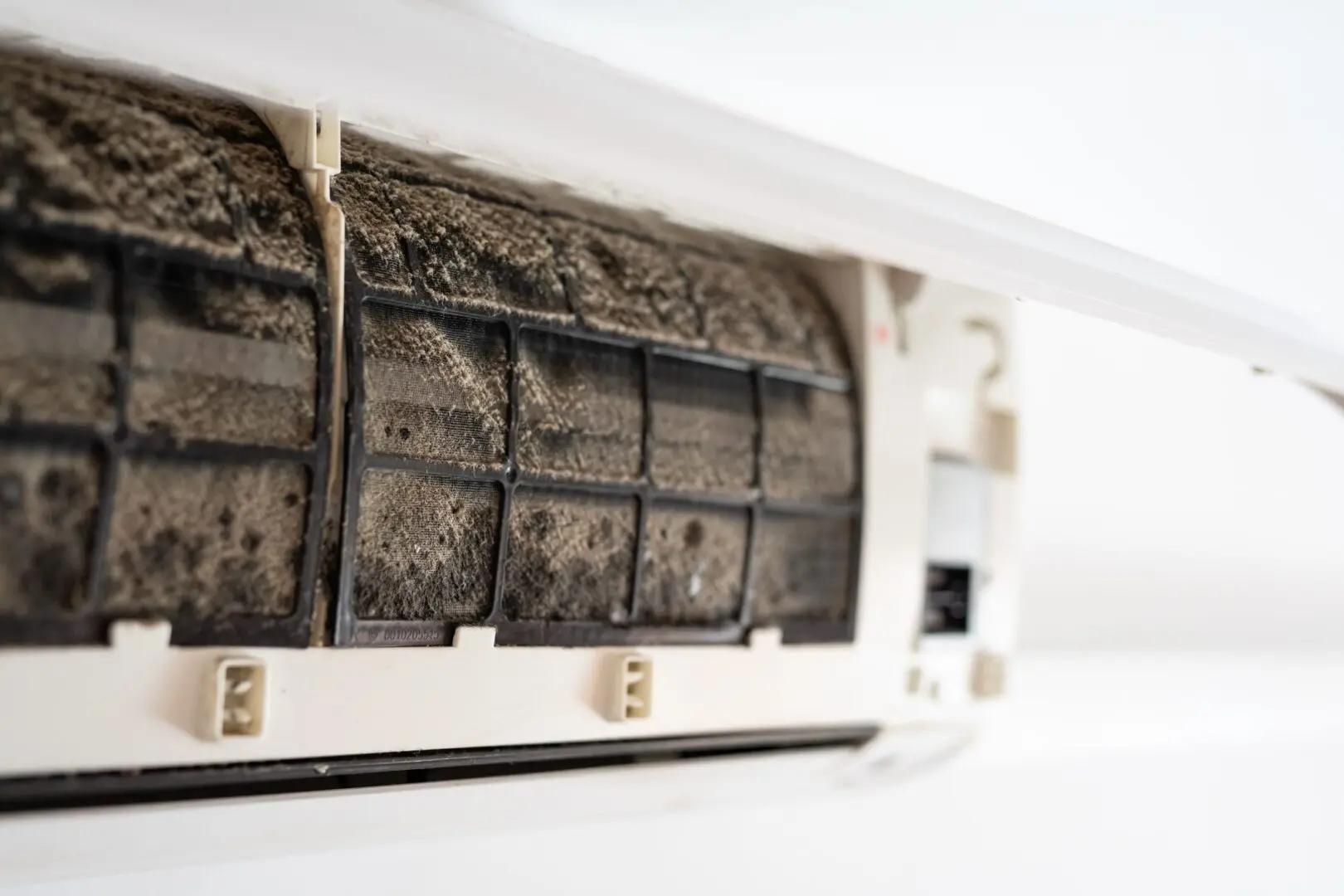
Maintaining your air conditioning units is essential to ensure that you are not spreading mould spores throughout your space. Air conditioning systems—including split systems, ducted systems, and portable units—naturally attract and trap dust, organic particles, and moisture. This combination makes them ideal breeding grounds for mould if they are not properly maintained.
As air passes through the unit, contaminants build up on filters, coils, and internal components. When moisture from condensation is introduced, it creates the perfect environment for mould to grow and multiply. Once established, these mould colonies can release microscopic spores that are then circulated throughout your entire home or workplace every time the system is running, impacting indoor air quality and potentially re-contaminating clean areas.
Regularly cleaning your filters is one of the most important steps in preventing this. Clean filters improve airflow, reduce dust accumulation, and remove a key food source for mould. However, surface-level maintenance alone is not enough. Annual professional deep cleaning of your air conditioning units is essential to address hidden areas such as internal coils, fan housings, and drainage systems where mould can thrive out of sight.
By combining routine filter cleaning with scheduled deep servicing, you significantly reduce the risk of mould growth and prevent your air conditioning system from becoming a distribution point for spores. This not only keeps your air cleaner and fresher but also supports a healthier indoor environment overall.
Choosing the right insulation for your climate in ducted air conditioning is critical because it directly controls temperature stability, condensation, and ultimately the risk of mould growth within your system and ceiling spaces.
Ducted air conditioning works by moving cooled air through ducts that often run through hot, humid areas like roof cavities. When these ducts are properly insulated, the insulation acts as a thermal barrier, keeping the cold air inside the duct at a consistent temperature while preventing warm, moist external air from interacting with the duct surface. This stops condensation from forming.
However, if the wrong insulation is used—such as insulation that is too thin, poorly installed, damaged, or lacking a proper vapour barrier—the temperature difference between the cold air inside the duct and the warm surrounding air can cause condensation to develop on or within the ducting. This moisture can then soak into insulation materials, ceiling linings, and surrounding structures.
Once moisture is present, mould can quickly establish itself, feeding on dust and organic materials within the insulation or nearby building materials. Over time, this can lead to persistent mould issues, musty odours, reduced air quality, and even structural damage. In a ducted system, there is also the added risk that mould spores may be drawn into the airflow and distributed throughout the property.
Proper insulation—correctly rated for your climate, with adequate thickness and an effective vapour barrier—prevents this cycle by minimising temperature transfer and stopping moisture from forming in the first place. In humid regions especially, getting this right is essential to protect both the performance of your air conditioning system and the health of the indoor environment.